Monday, 31 October 2016

Week 9 - Fakeshop (continuation)

These are the questions raised during the presentation on Fake Shop ;

1. Who are the other members of fakeshop.
2. Why do they call themselves fakeshop?
3. What is their background? Does their background influence the outcome of the project?


I came across onto Josephine Bosma website. She is a journalist and an art critic living and working at Amsterdam and she focuses on art in the context of  the internet. An interview between her and fakeshop members were posted on her website. 

Prema Muthy is one of the founder besides Jeff Gompertz. She is one of the founder of the online performance. Fakeshop is known for their performance in which poetic mix of both online and offline environment. 


Other Fakeshop members includes Jeff Gompertz (founder), Eugene Thacker and Ricardo Dominguez. Prema is  an artist living in New York. She did not create artwork until she moved to New York from Texas. She began working with an inventor who developed algorithms for large format digital printing systems. At the same time, she also started performing with an art group called 'Floating Point Unit' which how she met Jeff Gompertz and Vlasto Mikic. It was during that time that she started making art through the use of computers. With the group, she started to work with CUseeme as remote participation device. Cuseeme is a popular internet video conferencing tool developed by Cornell University. They broadcast from installations and would do it in abandoned sites. They used CUseeme to instigate an artistic element into the mundane environment where people get to play along with what they were doing. They would chat with collaborators around the world and ask where the installation was built. They would also ask people to chat 'stream of consciousness', 'exquisite corpse' style on topics that ranged from bio piracy and genetic copyright. 

 "They would respond back and they would create this very beautiful hypertextual narratives, almost 'exquisite corpse' style. The surrealist game where they would draw something, fold the paper and someone would add to it unknowingly and it would create this work of art. We are using chat in the same way." - Prema Murthy


Unfortunately Floating Point only lasted about two years. Gompertz and Prema then founded Fakeshop together. Fakeshop(1997-2000) was an art performance warehouse space located at 90N 11th Street in Williamsburg, Brooklyn. Their performance incorporate CuSeeme technology, live video mixes and sound were created at the space and broadcast live every weekend for 3 years. Frequent collaborators include Ricardo Dominguez, Diane Ludin and Bruno Ricard.

neutralFshop.jpg

MultpleDwelling2.jpg

Prema claimed that the online audience has developed fakeshop.

"The last project we did, it was called 'human use of human beings', based on a Norbert Weiner book about cybernetics from around 1950, had an interesting by product. After the last show was over the installation was torn down, but we kept the computers running with CUseeme on it. We were using a reflector site at the university of Japan so a lot of the participants were Asian (also from around the world of course). It was interesting what happened. They would go back, they would refer to our website, the URL, they would take texts from it, texts Eugene Thacker had written, copy them and go back to CUseeme and past it in. There were discussions, people would respond to that... To me that level of participation, to actually switch browsers, go to the website and then come back to CUseeme and instigate their own conversations based on texts we had written: I had never seen that before. It was going on for weeks after our installation, in all languages. It was really exciting for me to see the audience being international and being so motivated." - Prema Murthy


Eugene Thacker is a writer, theorist and artist. Most of his works are collaborated with the New York based net performance group Fakeshop. Eugene works revolves around bio tech, science fiction, experimental literature, art and science. 

Image result for eugene thacker

Eugene's background is more in critical theory and literary theory. He was involved in experimental literature community. The intersection with science for him is recent. He was interested in the body and the relationship of the body to different technologies. The web actually inspired him to start working as an artist. 

" I really came to think of me as an 'artist' when I was working with the web and I was doing not just text, but html, image, video, sound, exploring all these different things." -Eugene Thacker
His writing is connected to his artwork as he have written alot about new media and science fiction. 

Upon further research on Fake Shop, I came across another interview between Josephine Bosma and Jeff Gompertz. It was about their group name, Fakeshop. Gompertz. The name fakeshop was lifted from a line in a book of Alain Robbe Grillet. He was Gompertz favourite writer. He also loves to 're-do scenes from movies'.
One of the most important questions raised during our presentation was, "Does their background influence the outcome of the project"?
Well, I would rather say the projects have influenced Prema and Eugene to become an artist and helped them to expand more creativity. Before the group was formed, they were not artist or they do not have an artistic background. However for Gompertz, his background did influence the outcome of the project because he was an installation artist. Therefore, he knew about arts and have an artistic background. I also think that CUseeme software have inspired them to work on internet art and broadcast performance art through the net. 


sources :
- http://www.josephinebosma.com/web/node/73
- http://commtechlab.msu.edu/sites/letsnet/frames/bigideas/b9/b9u3l2.html
- http://www.josephinebosma.com/web/node/75
- http://www.premamurthy.net/#/fakeshop/
- http://nettime.org/Lists-Archives/nettime-l-9712/msg00026.html


Sunday, 23 October 2016

Week 8 - Fakeshop


http://www.fakeshop.com is a net.art piece itself - a project changing continuously in a fluid rhythm. Juxtaposing elements out of a variety of online & offline installations together form a permanently muting broadcast of audio / video / visual moments. Each individual installation is built around contemporary themes and the research of the net / its options / its interactivity.


Jeff Gompertz a media and installation artist, combine new media technologies with traditional tools of installation art production, fakeshop projects incorporate architecture, video, surveillance,net broadcasting, and performance elements. 

Image result for fakeshop jeff gompertz

Image result for fakeshop jeff gompertz

Fakeshop brings these elements together in a collaborative approach, with personnel expanding and contracting depending on the particular work being produced. This focus on ‘situational’ architectures and architectural situations has led into an exploration of human scale, especially into the realm of capsules, compartments, modular building blocks, and interior performative spaces designed for the individual human gesture. Moving currntly into a more intensive use of 3D virtual worlds and online MMUG platforms, audience interaction and instigational performance continue to play a part of this strategic. Schemes in this direction include interventions into found exterior space such as 798 dashanza distrct in Beijing, Williamsburg bklyn, etc. 2007 projects in Beijing will incorporate the online social network communities, chatrooms, multi-user gaming environments, video surveillance etc. 

All Fakeshop projects are characterized by a critical cynicism analyzing as much as visualizing contemporary developments / global changes as much as consumer - integrated characteristics of our so - called normal life. Fakeshop can be considered more of a site of research into the uses and mis-uses of computer and networking technologies, which often include the Web, streaming media, programming, digital video and audio, IRC, 3-D modeling, and VRML. Combined with such virtual technologies are often physical-space installations utilizing warehouses, abandoned industrial spaces, basic construction materials, and live performers.


Since the founding of Fakeshop in 1997, Gompertz art production efforts have focused on bringing these elements to work in the group's projects. Built around contemporary themes, these projects incorporate architecture / digital video / imaging / net broadcasting / audio / performance. With Fakeshop he has instigated and / or participated in numerous experimental internet broadcasts / real time collaborations in the electronic community, including work with Radioqualia - AUS / Public Netbase - A / Kunstradio Berlin - D / NetAffects - Amsterdam / NL / Turbulence.org - NYC / US / Xchange network - international / Hell/No-such - international / WKCR Radio - NYC / US / CandyFactory - J /


Spawn_Kill is based on an audio installation performing in front of a strongly linear background. With its fastly changing effects of trembling buttons / moving code imagery / chasing sounds Spawn_Kill presents itself as a highly interactive composition of contemporary net elements without forgetting to transmit a clear message / question - what is the sense of speed in a huzzling & buzzling world like ours - is it to spawn & kill?


The Capsule Hotel is another long - term project Fakeshop is hosting on its site under uncompromising use of the contrast between Spawn_Kill as a linear / web technology - oriented project and The Capsule Hotelonline installation currently showing psychological / time - and society - relating video clips. At first sight the portraits look colourful / sympathetic / vivid. Only on longer viewing these close - ups / faces appear as faces of 'normal' people / of people / of guests / of the guests of a virtual Capsule Hotel present themselves as a narrow world without vision / as a contemporary cage of normalness with all its aspects of boredom / isolation / loneliness.  The capsule hotel and its multi-camera monitoring system functioned as a live-in video chatroom. It captured images from individual 'pods' as well as ambient views of the site – corridors, bathroom, shower etc. Focusing on these verbatim images captured randomly by the CCTV system (without human intervention) reveals the artificial family that developed during QUIET. The capsule hotel is one of Gompertz seminal works. Leo Fernekes has generously made the image data available (saved on a hard drive for 15 years) the backup of the CCTV system he designed and realized as the technical infrastructure of the capsule hotel installation.


Image result for the capsule hotel fakeshop


Image result for the capsule hotel fakeshop

The popup Broadcast is one of the recent Fakeshop pieces. It shows a live quicktime stream being generated from gompertz's desktop - TV news shots relating to current and ongoing political situations provoke the user by interrupting the live stream of 'normal' / 'every - day' situations / moments developing spontanously in theFakeshop production team.


sources: 

-http://burb.tv/view/User:Fakeshop


Week 7- Art Hackathon


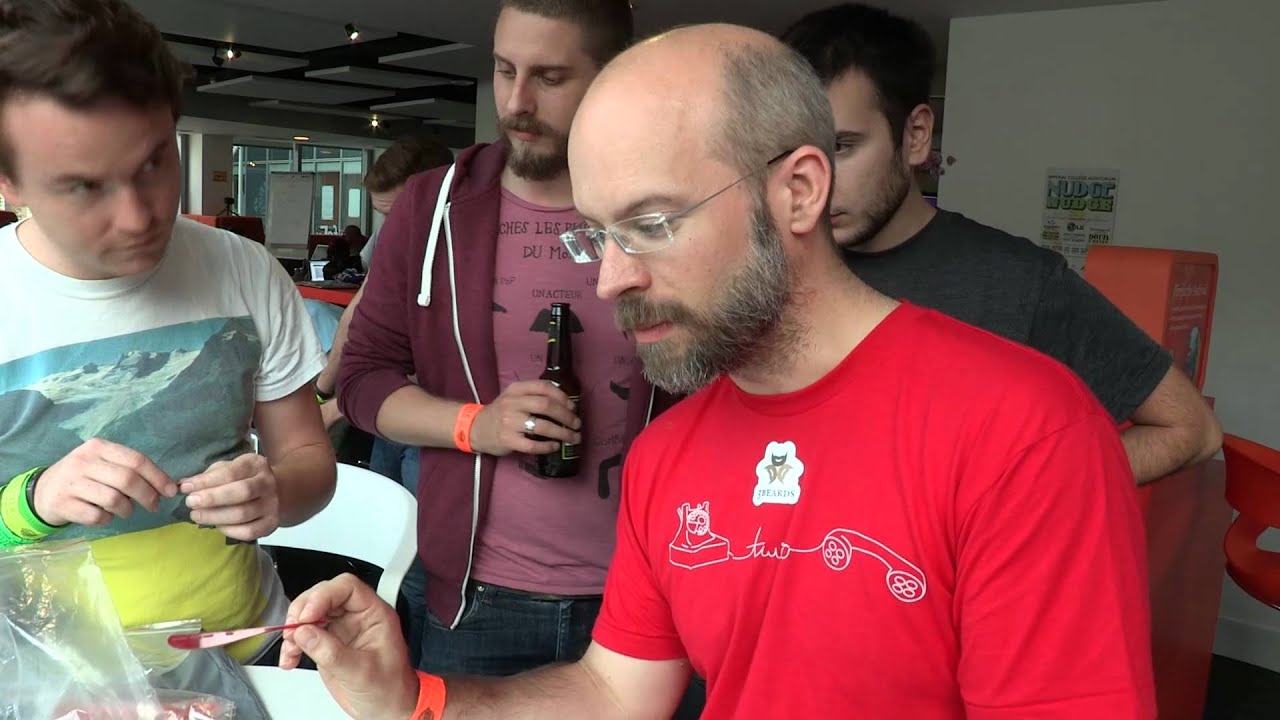
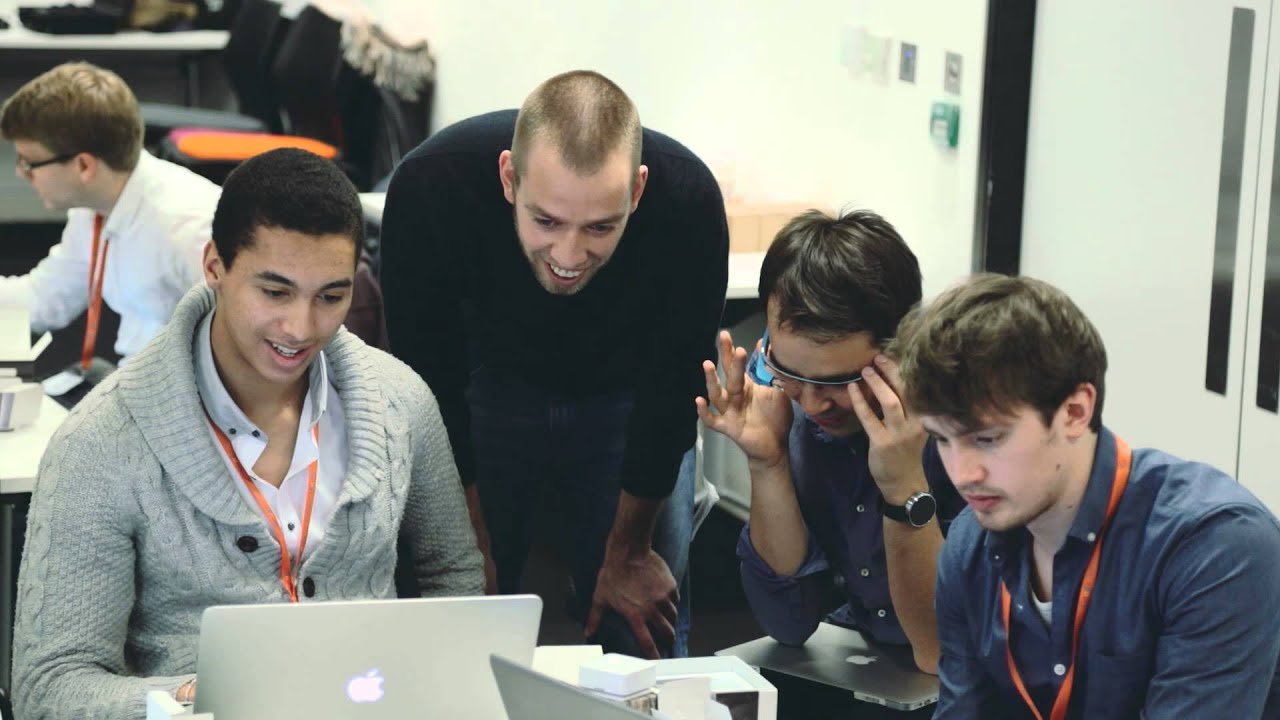
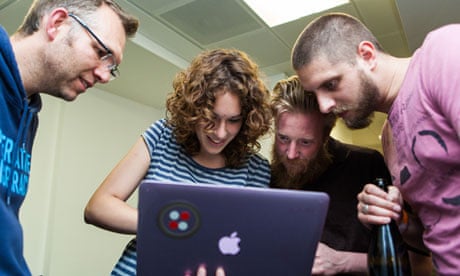
A group of creative programmers gathered for a 48 hour hackathon. The idea was to take data and turn into something "magical". The event’s organisers are called 3 Beards, though it turns out there are four of them and only three have significant bristles. 

Image result for art hackathon


Image result for hackathon london

Image result for art hackathon


Hacking comes in three varieties. One is an invasion of privacy practised mainly by middle-aged men on celebrities and the vulnerable; the other is carried out mainly by teenage boys on the military-industrial complex. Both are well-documented and often result in a court appearance. But there’s a third kind, a good kind, so far unfeatured on Newsnight and mainly practised mainly by young men with enthusiastic smiles and creative facial hair who know their Python from their Ruby on Rails (they’re programming languages, dummy). The good kind is about taking something apart – a computer, a line of code, a set of data – and rebuilding it, hopefully making it better, giving it a new function, or just doing something surprising and disruptive. A hackathon is about much more than that. As Michael Hobson explains: “The participants get an experience which is hard to find elsewhere. It’s only in this high-pressure, time-sensitive environment that you can really come face-to-face with yourself, and see what you’re capable of. 

The 3 Beards thought London hackathons concentrate on creating startups. “They are mainly focused on creating a business idea, then pitching it on the final evening, along with all the relevant trimmings – revenue plan, target market, etc,” says 3 Beards’s Michael Hobson. “We thought that by making the output purely artistic, it would foster more creativity and allow people to really run wild with their ideas.”
Hence, this hack has a theme: art meets tech. The aim of the weekend is to encourage the hackers to take some of the masses of data living on the internet, or even create some of their own, and present it in new, unusual ways, to make something from it – a piece of music, an artwork, a machine, a game – something that brings the data to life. Not everyone here has a computing background: a smattering of artists, designers, musicians have signed up to collaborate.

Image result for art hackathon

Screen Shot 2015-05-19 at 00.37.21


People at the front pitching ideas

Fifty artists-hackers and hacker-artists got together over a weekend in a big space to create an art exhibition from scratch and demonstrate the expressive potential of new technology and the power of radical collaboration in art. The digital works of art created include, but are not limited to interactive installations, visualizations, web services, small physical objects and more. 

Art Hackathon

Art Hackathons, or Art Hacks, are where teams take data and turn it into something creative or artistic, often over an intense 48 hour period. Samuel Fry lists some examples of great art hackathons that have taken place over the last couple of years. Art Hackathons are now popular throughout the world: from New York to San Francisco (SF) and from London to Berlin.

Examples of Previous Art Hackathons:
There are a number of organisations that have run Art Hackathons of different kinds. Here are a few that have been run in the past as examples:


Hack the Barbican:
Throughout August 2013 Hack the Barbican took over the Barbican’s cavernous foyer spaces and filled them with 100 discipline-bending installations, performances, workshops and discussions.

Art Hack Day:
Art Hack Day is an event dedicated to cracking open the process of art-making, with special reverence toward open-source technologies. Over 48 hour periods, artists and collaborators inhabit a space to create and explore the participatory nature of technology. This brings together hackers whose medium is art and artists whose medium is technology.

The Digital Sizzle:
Over one weekend a mixture of 100 people are brought together. These are artists, developers, musicians and creatives, guided by a variety of mentors, to just simply “create”. They have 2 floors – the whole conference floor and also some rooms at South Place Hotel, all dedicated to the Art Hack for the entire weekend.

3D Hackathon:
Also known as the Metropolitan Museum of Art Hackathon. Twenty-five digital artists and programmers descended upon the Metropolitan Museum’s Art Studio for the Museum’s first 3D scanning and printing Hackathon. The invited guests, along with staff from MakerBot Industries, spent two days photographing Museum objects and converting the images into 3D models with the help of special software.

Culture Hack:
Culture Hack has grown into a digital development programme – no longer simply about one-off hacks, each Culture Hack programme now lasts for between 6 to 12 months.
Art Bytes:
Also known as the Walters Art Museum Hackathon. This is a hackathon where technology and creative communities work together to build programs and applications inspired by art or to add to the museum experience. Attendees also visit the museum’s galleries for inspiration throughout the weekend.
Etsy Hackathon:
Musicians, designers, programmers and makers of all kinds spent the day at Etsy making music, ending with a concert of what they created. The event really began the night before, with a series of talks by different technical music makers, including presentation on software generated Christmas music, software as music and violinists.


Hackathon Tips:
There are other digital making programmes that develop the participants knowledge of technology. Here are a few programmes that could give tips to those looking to take part in an Art Hack:

Make Things Do Stuff :
This is a digital making campaign. It lists a number of simple online tutorials that can help people get started in digital making, but who are not sure what you want to make.

Code Club:
Code Club is a UK-wide network of free after-school coding clubs for ages 9-11. You can learn to code and programme with lots of fun projects, showing you how to make computer games, animations and websites.

Technology Will Save Us & Little Bits Global Make-a-thon:
During the London Design Festival, Technology Will Save Us -London’s first haberdashery for technology and education, hosted a Global Makeathon – to help designers get away from the screen and get their hands dirty!


I think just hacking itself is very dangerous and may put one behind bars but to be able to hack into anything, that is smart. I am actually against hacking if it is for the sake of fun, to disrupt and to steal. I think it is ethically not right. Upon further research on art hackathon, I really like the idea of how art meets technology. Like for instance, the 3d printer. I think Art Hackathon is a very beneficial especially to artists because as time pass, art movement will change too over time. And to keep up, I think new media is the best way to keep the art scene alive. I just like how creativity is being combined and manipulated by technology. It may be challenging but the end result would be very pleasing. I believe art hackathon would inspire artist for a change of idea, perhaps something we have never encountered before. 


Sources :

- http://www.rawstory.com/2012/09/hackathon-where-art-and-technology-run-wild/
- http://www.create-hub.com/comment/art-meets-tech-hackathon/
- http://jimmytidey.co.uk/blog/what-happened-at-arthack/
- http://arthackathon.co.uk/


Saturday, 1 October 2016

Week 6 - Final project proposal 1


My group's conceptual idea is to actually detect inner emotions and to make participants to fully understand their true emotion and start contemplating about it. Their through emotions will be projected onto their face as expressions through projector. In order to make this possible, we thought of using thermal camera to detect temperature of heat.


Thermal imaging cameras can detect the heat given off by a person or an object through infrared. The lens focuses waves from the infrared energy present in all objects onto an infrared sensor array. Thousands of sensors on the array convert the infrared energy into electrical signals which create a video image. 


We also had an idea of using lie detector to capture the heart rate. Lie detector is also known as polygraph test. When a person takes a polygraph test, four to six sensors are attached to him. A polygraph is a machine in which the multiple poly signals from the sensors are recorded on a single strip of moving paper graph.  Polygraph can be used to record a person's breathing rate, pulse, blood pressure and perspiration. 


Image result for face projection daito manabe


The above artist have inspired us to work on our final project. I like how they play with projection and how the face can be detected and then moving objects will be projected to the alignment of the face. The creators are Daito Manabe and Zachary Liberman. Both friends have created an interactive digital art that revolves around the human face. They sterted of with the app FaceTracker. Face tracker is an app generic non-rigid face alignment system. They added a bunch of code, Kinect and mathematical algorithms to create an interactive face projection.


However in my opinion, I think we need to do more research on the use of thermal camera if we want this idea to work out and be more realistic. I think that the lie detector is perfect for this project but not the thermal camera because it can only measure and display thermal profile of objects in relation to the temperature of surrounding objects. After doing research, I have found out that there's alternate way of detecting a person's emotion and that is through aura imaging.

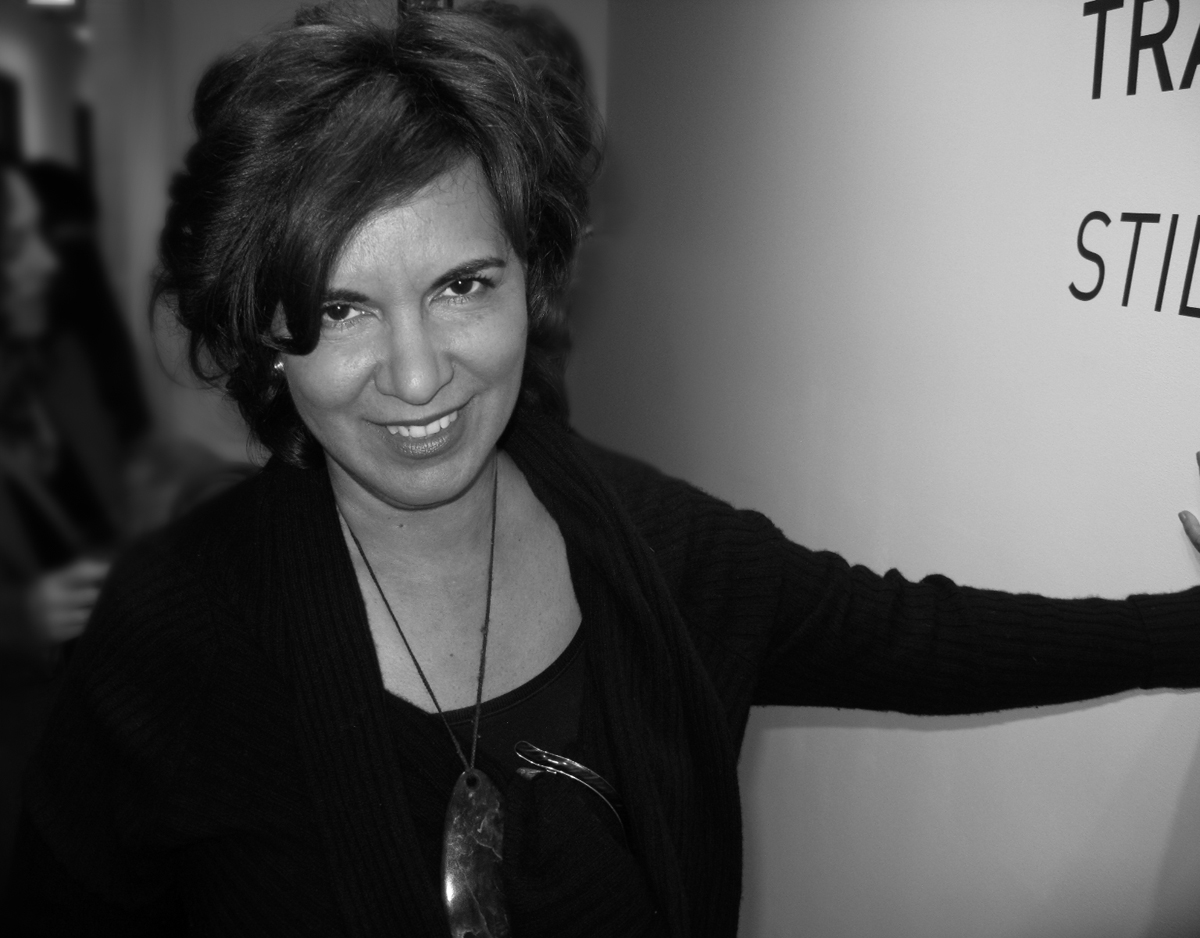
By using The Aura Video Station, we can capture aura and chakras and then the data will be processed and displayed on the computer screen. The aura camera uses a a hand biosensor to measure biofeedback data. When the hand is placed on the sensor, the electro-dermal activity and the temperature is the skin on the hand will be measured. When processed, it'll be displayed as and aura image of the person's energetic activity on a computer screen. The aura image displayed is a representation of individual's bio-energetic field, emotional-energetic state, personality type and energetic wellness.

Below is a short video of how the technology works.


Sources;

-http://pr-infrared.com/about-thermal-imaging/thermal-imaging-facts-vs-fiction/

-http://www.bitrebels.com/technology/interactive-digital-art-all-about-fun-facial-expressions/

-http://science.howstuffworks.com/question123.htm

-http://www.daito.ws/en/work/face-projection.html (do check out his other works)
- https://aura.net/about-aura-cameras/

Wednesday, 7 September 2016

Week 5- Singapore Night Festival 2016


I didn't manage to watch the street performance because I had class at 7pm and I ended class at 9pm. I met my friend but we didn't manage to take lots of pictures because it was really crowded and I was pretty embarrassed to take a selfie. But, I took pictures of the works that I find interesting. 


I find this work by Choe U-Ram fascinating. It is a kinetic sculpture. The work titled "Una Lumino Portentum" is made of motor, LED, acrylic, CPU baord, polycarbonate 360(w) x 48(d)cm. Born in Seoul, Choe loved machinery as a child and worked at a robotics company after college. Inspired by the philosophical concept of Emergentism, Choe was led to consider possible systems of communication living organisms which exist in the absence of an organisational structure or hierarchies of power. Emergentism explores the emergence of new, unexpected properties irreducible to interactions within and between parts of a system. This work consist 51 shiny flower-like individual units with translucent shells. The units of Una Lumino Spiritus produce pulsating clusters of light as they communicate with one another. Operating as individuals, each unit is not programmed to follow a set pattern, but is rather triggered by perturbations in its vicinity, thereby setting off chain reactions.


Choe's work engages a fanciful dialog of aesthetics and machinery and explores themes of biological transformation, flight, and movement. Motors, heat and light sensitive materials add to the intricacy of Choe's kinetic sculptures. I like how the flowers are blooming slowly. I just feel like I'm watching a real flower blooming. And I wont be surprised that 50 years later, the world will be filled with synthetic flowers. With technology, some of us might even feel like we don't need to rely on natural resources anymore. The world is different now, it's about moving forward and heavily depending on technologies to create a better future. I must say that although technology is useful, it is still not everything. And I have seen technology controlling a lot people nowadays. Shouldn't us, humans with emotions control technology? It is just not right to be seeing the opposite and having the fact living in world filled with technologies ruling and distributing the society. I have to agree that with technology life is sightly easier but technology makes us lazy too. I have nothing against technology because I do use it but I do not let technology take control of me and my life. Most of just take advantage of technology and hence, they grow lazy each day. We should use technology wisely not blindly. Some people are also taking advantage of having the fact that people rely on technology so much that they could hack and leak information easily through the use of technology.  


bibliography:

- http://www.galleryhyundai.com/en/?c=artist&s=1&gbn=slider&gp=1&ix=179
- https://www.singaporeartmuseum.sg/downloads/exhibitions/Odyssey_SG_FA_lowres.pdf


Week 4- Umbrella.net- Jonah Brucker-Cohen and Katherine Moriwaki


I think that this work is very interesting but there are no images of the actual umbrella being used. I couldn't find information  and videos about the performance art too.  So maybe, this performance art was only a proposal or maybe it didn't turn out as planned. I like the concept, it is a genius piece and if I were to improvised it, I'll definitely make an app for the umbrella. When the umbrella is used, users can open the app from their phone and see the nearest shelter, spa, shopping mall, cinema or a hangout place to have a warm cup of tea while waiting for the rain to stop. The umbrella will also be able to detect other nearby users who are using the umbrella. And users will be able to chat with one another via the app and meet up at any nearby shelter or cafe's. If you're rushing and you're stuck somewhere and desperately need a cab, the umbrella will start to light up to give signal to taxi drivers that you need a cab. With the umbrella, users will get a clearer picture of what or who is around within a proximity. eg, taxi, other users, cafe's, mall, cinema, spa, shelter.  Hence, nobody will complain or mention about having a bad day on a rainy day because you can either get home fast by booking a cab or win yourself a date plus if you're new in town or lost you can always can an overview of a clearer map and explore new places. Rainy days aren't bad afterall.


While scrolling through my facebook timeline, I actually came across another video on solar powered umbrella. It claimed that the umbrella is for Muslims pilgrims but I'm sure anyone could use it too. It has a gps system to hep pilgrims locate each other, a fan, usb, flashlight and usb outlets. I think that this is more interesting than the umbrella.net project proposed by Cohen and Moriwaki. This umbrella could really come in handy when its dark or scorching hot. I hope the inventor would consider about having users like other races or religion besides only having it used by Muslims. This is a brilliant idea but it would be even more exciting if anyone could use it.


bibliography:
-http://inter-dc.blogspot.sg/2011/03/umbrellanet.html
-https://books.google.com.sg/books?id=v2XKptosHykC&pg=PA62&lpg=PA62&dq=Jonah+Brucker+umbrella&source=bl&ots=1qK1F92ilE&sig=JP64HsZoQC6coZvqMSKEmqh0FMc&hl=en&sa=X&ved=0ahUKEwi10MHqobbOAhXFMY8KHVgJAUc4ChDoAQhDMAA#v=onepage&q=Jonah%20Brucker%20umbrella&f=false
-http://www.coin-operated.com/about-2/
-http://www.newschool.edu/parsons/faculty.aspx?id=4d54-4d77-4f44-5577
-http://angelaoart.blogspot.sg/2009/10/jonah-brucker-cohen-and-katherine.html 
-http://www.coin-operated.com/2010/05/04/umbrella-net-2004/
 -http://web.media.mit.edu/~stefan/hc/publications/BruckerCohen04UmbrellaUBICOMP.pdf
-http://cogdogblog.com/2014/10/umbrella-net/
-http://web.media.mit.edu/~stefan/hc/publications/BruckerCohen04UmbrellaUBICOMP.pdf

Week 3- Tracey Moffatt- Nice Coloured Girls

Image result for tracey moffatt

Tracey Moffatt is an Austraian photographer and filmmaker. She then moved to New York and began her career as an experimental filmmaker and as a producer of music videos and continued making films. Her concern with power relations is demonstrated in the series Scarred for Life (nine offset lithographs, 1994), which juxtapose photographs of children with text, mimicking the layout of Life magazine during the 1960s. Useless, 1974 (1994; priv. col., see B. Reinhardt, ed., p. 21), shows a young girl cleaning a car in a suburban setting; the text beneath reads ‘Her father's nickname for her was “useless”.' In the late 1990s she focused on the relationship between Australian Aborigines and white colonial settlers. The highly atmospheric seriesLaudanum (19 photo-engravings, 1998; Frankfurt, L. A. Gal.), shows the relationship between a woman and her aboriginal servant. Based on Pauline Reage's erotic novel Story of O (1954), it presents two actors posing in a variety of locations around a large house, suggesting sexual and power relations laced with narcotic hysteria. The use of photogravure and deliberately flawed prints heightens the ambience, informed by late 19th century photography as well as by Expressionist cinematic techniques of shadow and distortion. The typically dreamlike quality of these works creates a space in which actors can embody wider sexual and social conflicts. Moffatt has held approximately 100 solo exhibitions of her work in Europe, United States and Australia. 


'Nice Coloured Girls" a film by Moffatt has strucked all of us in awe. It is a 24 minute long film. 

                                      
                                          Australia, 1987, 24 minutes, Color, 16mm/DVD 
                                          Order No. W99136

This film explores the history of exploitation between white men and aboriginal women juxtaposing the “first encounter” between colonizers and native women with the attempts of modern urban Aboriginal women to reverse their fortunes. Through counterpoint of sound, image, and printed text, the film conveys the perspective of Aboriginal women while acknowledging that oppression and enforced silence still shape their consciousness.

Image result for tracey moffatt NICE COLOURED GIRLS

Image result for tracey moffatt NICE COLOURED GIRLS


Here's a short summary of the film I've found online.

"In a large Australian city, two young Aboriginal girls describe in voice-over their strategy for fleecing a “captain,” a White man, taking advantage of him to treat themselves to a free night on the town. We follow their maneuvers with amusement. The scenario holds no surprises and indeed the course the action takes is entirely predictable since this is not the first time the young women are up to their tricks. They come on to the “captain” while making sure to get him good and drunk, then get him to take them to a fine restaurant where they shamelessly take advantage of his money. At the end of the evening, they skip off laughing.

We shouldn’t be fooled, however. Their apparent victory or revenge is short-lived and seems more like a good trick than a real reversal of the situation, for these Aboriginal women are still confined to an inferior role, socially and economically. The counterpoint is clear. While they play their trick on the “captain,” other images of old drawings and idyllic views of untouched nature are inserted in the film, suspending the main action. From time to time, a hand scribbles over these images, challenging this version of the story and revealing contradictory and ambiguous links between the past and the present. Putting history in perspective in this way dramatizes the overt link that memory creates with the past events and one’s interpretation of them. It also underscores the burden of a past that has imposed unjust relationships that continue to perpetuate themselves in the present because they are so ingrained in people’s behavior.

The second story, which goes back to the 18th century, is also told in voice-over, by a man with a refined English accent. He recounts the first contact between a group of White who had landed in the unknown lands of South Wales and Aboriginal women.1 Speaking like an entomologist, he tells of his surprise and curiosity at the sight of these island women. His calm tone is an odd contrast to the seductive inflections and excited delivery of the young women’s voice-over of the main narrative. The English explorer is shown to be anxious about the wellbeing of the young native girl he observes and describes for us, which emphasizes the indifference and total lack of respect of young women vis-à-vis their hoodwinked “captain.” Juxtaposing the “objective” narrative of the Englishman discovering a new world and the adventures of these two sharp young women pitted against a stupid White patsy, Nice Colored Girls casts an unforgiving light on the complexity and inescapability of the ties between Aboriginal women and White men, ties that are subject to the laws of colonialism from the outset and which never manage to shake off that yoke.


The English observer’s version in all its objective-sounding glory, which once suggested a different future, belongs to the past. Now it is the young women’s turn to speak; it is they who fuel the dynamic part of the film. Yet what do they really tell us about if not the weakness of their social and economic place and their contempt for their own, easily fooled captain. The rules aren’t quite the same but they perpetuate the unpleasant whiff of colonialism."   -Isabelle Aeby Papaloïzos


To me, this film is about stereotyping african women and that the title 'nice coloured girls"  is just part of sarcasm. Even, up till today, people still have this idea where all the african women are low class. They are uneducated people, strong, criminals and uncivilized. I think that this is a racism issue and everyone should take the time to start contemplating about this issue. Look at these pictures I've found on facebook and on google.

Image result for black girls racism


Image result for black racism against whites


It's sad to see how the media is not helping but instead they are aggravating this matter. And most of the things that the media published aren't true. It's just there to stir up anger among us and how irrational can humans be by fabricating lies and making false accusation about other races and religion. As an artist, this provoked me to make artworks and addresses on issues like these and hope for a change. If the society remains like these, our world will be a terrible place to live in and these affects all of us as there'll be more war torn countries like Syria. This world is already pretty much corrupted by the media along with ignorant and half-witted people like Donald Trump. Therefore, I want to make a change and I want the world to be a better place.


bibliography:

-http://www.artgallery.nsw.gov.au/collection/artists/moffatt-tracey/
-http://www.tate.org.uk/art/artists/tracey-moffatt-2669
-https://www.youtube.com/watch?v=Cyy_jskcR_o
-http://www.wmm.com/filmcatalog/pages/c105.shtml
-http://www.roninfilms.com.au/feature/507/nice-coloured-girls.html

-http://www.newmedia-art.org/cgi-bin/show-oeu.asp?ID=O0019359&lg=GBR